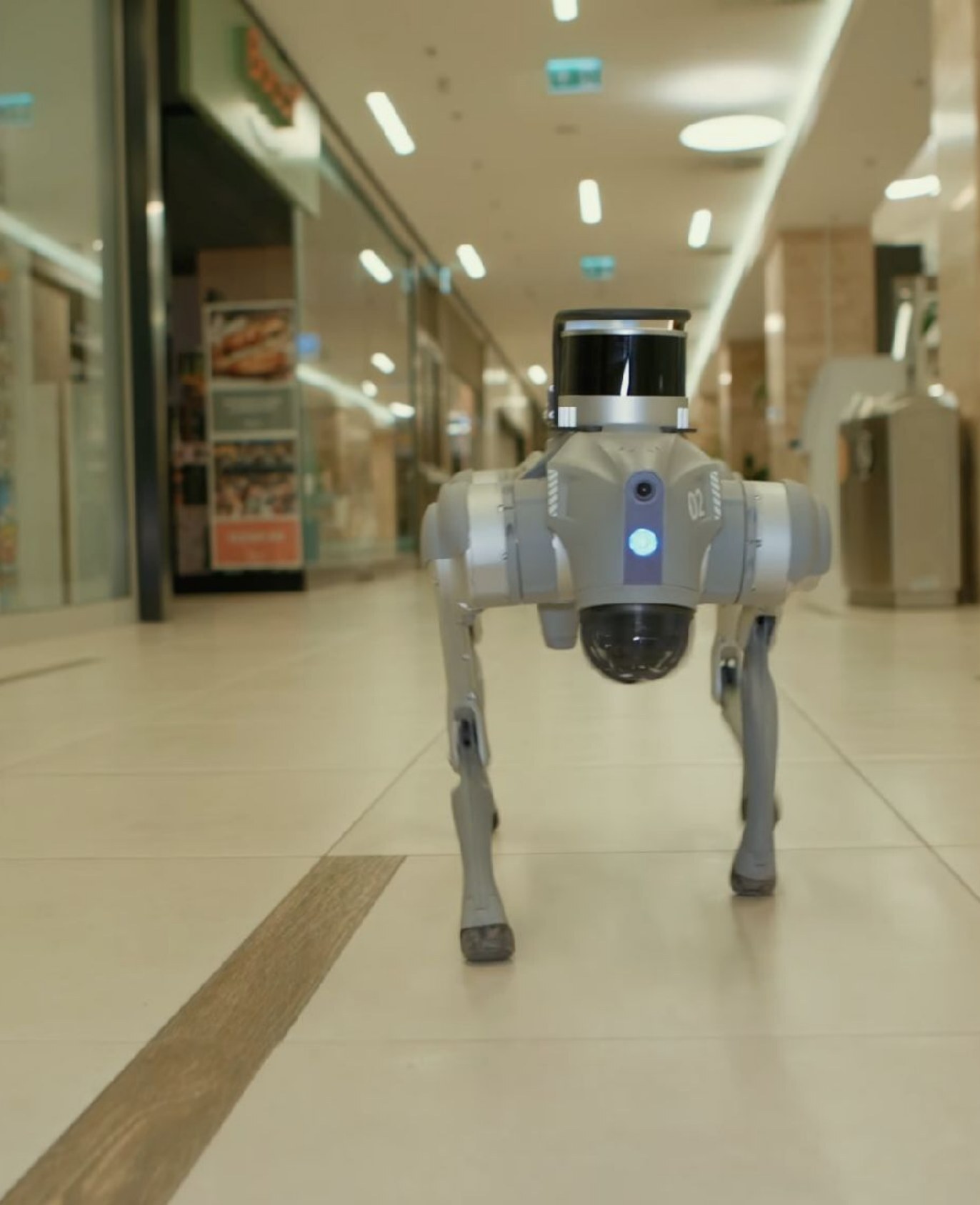
Security & Facility Operations
The patrol that never clocks out
Guard costs are climbing, the workforce is ageing, and you can only bolt so many cameras to a wall. Hungary’s ICON Real Estate Management found a different answer: a four-legged robot that walks the blind spots and reports straight to the control room.
- Case Study
- 6 min read
- Photography: Nortemsy
Picture a shopping centre at two in the morning. The shutters are down, the tenants have gone home, and the control room is watching a wall of fixed camera feeds. Somewhere between two of those cameras, a fire door has been blocked by a stack of pallets. Nobody will see it until the next guard round, if the guard happens to look.
This is the gap every property and security manager knows. Cameras see only where they were mounted. Guards see only what happens while they are walking past. Everything in between is, for hours at a time, unwatched.
ICON Real Estate Management, one of Hungary’s largest property operators, decided to close that gap differently. Instead of adding more cameras or more people, it added a layer that moves: autonomous robots from Budapest startup Nortemsy, running AI video analytics from AxxonSoft.
A profession running short of people
The pressure on ICON did not come from one direction. Over the past five years, its security operation has been squeezed by two forces that anyone running guarding contracts will recognise.
The first is cost. Hourly rates for guarding services have risen sharply, and every manned post now weighs more heavily on the service charge. The second is people. The profession is ageing with the wider population, and younger recruits are not arriving to replace those who retire.
The skills problem compounds both. A modern guard is not someone who simply sits at a desk. They are expected to run building management, fire protection and access control systems, a real technical demand on a workforce that skews older and was rarely trained for it.
The limits of one more camera
ICON’s first move was the obvious one: shift some of the load from people to technology. But fixed cameras have a ceiling. Beyond a certain density, it is no longer practical or economical to cover every corner of a building, and the corners that remain uncovered are exactly the ones an intruder, a leak or a blocked exit will find.
What ICON needed was coverage that could go where the cameras were not. That led it to Nortemsy.
We can’t install cameras everywhere, and that’s not the goal.
Legs where you need them, wheels where you don’t
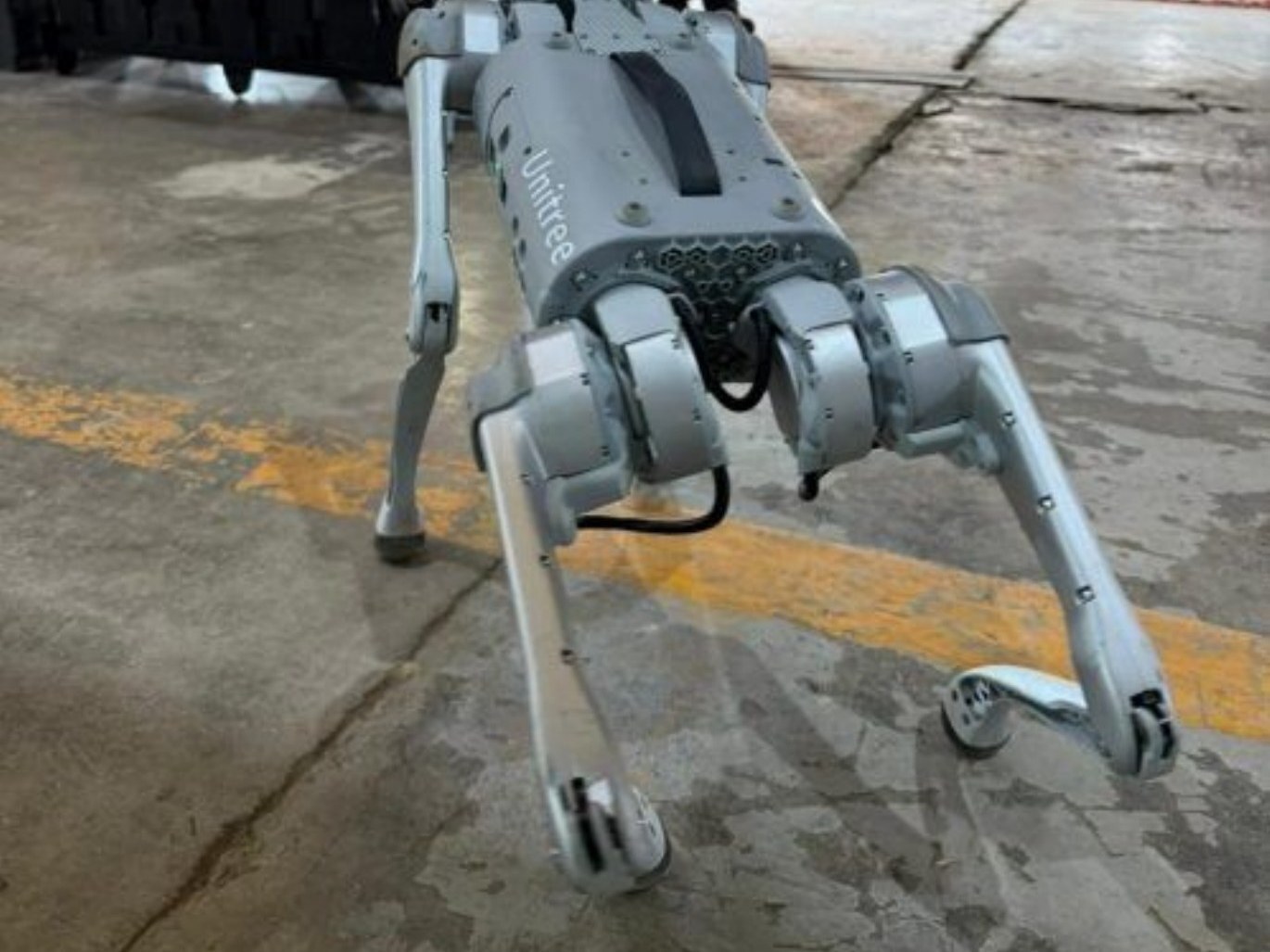
Nortemsy was founded to solve a problem its team saw in the robotics market: the hardware had become remarkably capable, but there was no software layer that let a company actually put it to work in a security operation. The company builds on quadruped robots from Unitree, the market’s volume leader, and supplies the platform that turns them into patrol units.
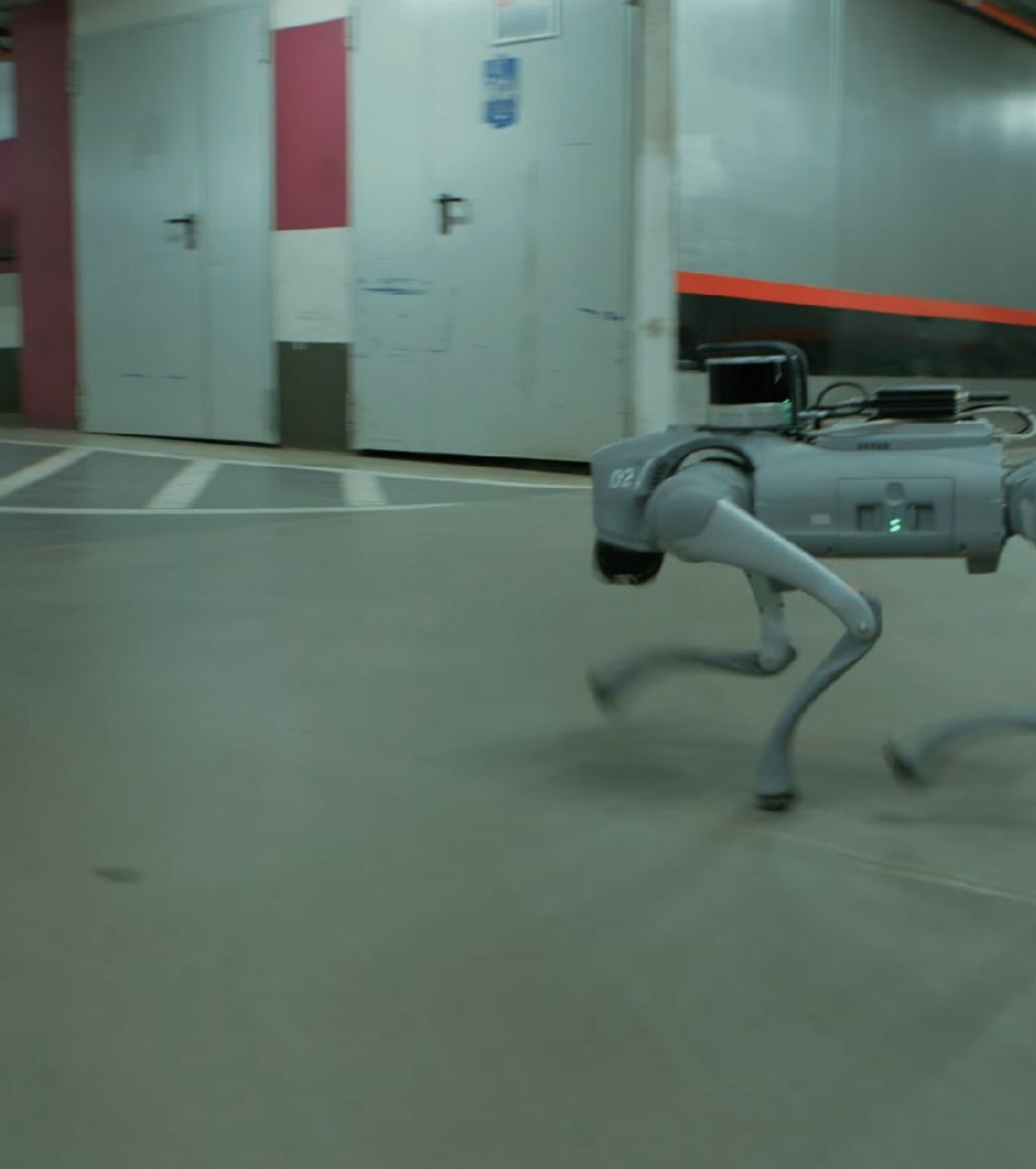
The four-legged form matters more than it might appear. A quadruped is highly stable. It climbs stairs on its own, handles slopes, kerbs and gravel, steps over ditches and keeps going in rain and darkness. That lets a single route cover an entire site, indoors and out, across several floors.
Some models go a step further, with wheels mounted at the end of each leg. On long corridors, car park decks and paved yards they roll, which is faster and kinder to the battery. When the route hits a staircase, a kerb or a muddy verge, they walk. For a site that mixes long flat stretches with awkward terrain, that hybrid is often the right fit, and it is why Nortemsy matches the robot to the property rather than the other way round.
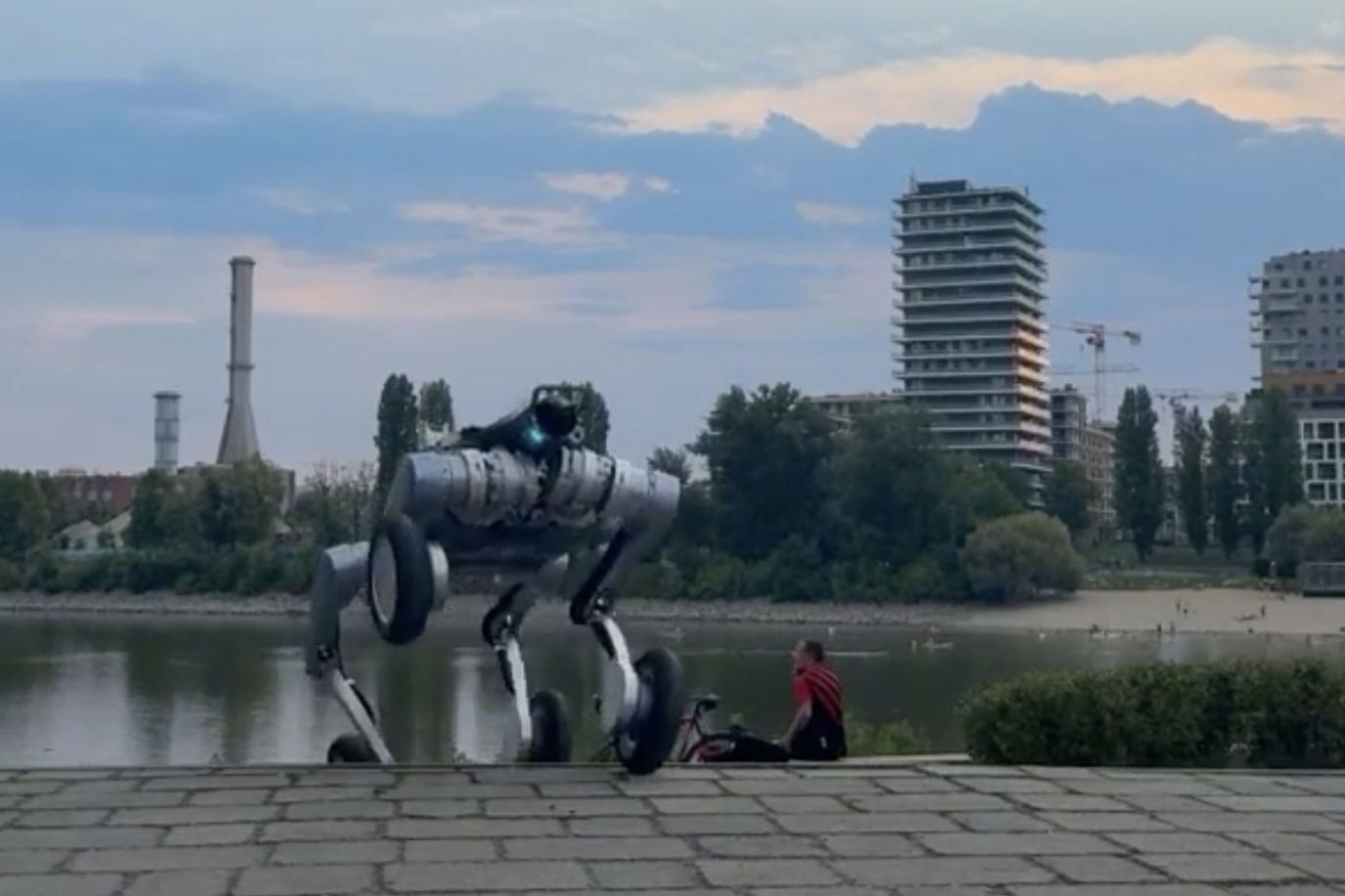
Each robot patrols for four to five hours on a charge, covering 10 to 15 kilometres, then walks itself back to its dock to recharge. Rotate the patrol and recharge cycles and you have round-the-clock coverage without a shift change. When something happens, it can run at 20 to 22 km/h, fast enough to reach a fire alarm or a fence breach well before anyone could walk there.
The robot at a glance
- Patrol time
- 4–5 hours per charge
- Range
- 10–15 km per 4-hour patrol
- Top speed
- 22 km/h for rapid dispatch
- Models
- Four-legged, or wheel-legged hybrids. Indoor and outdoor, several sizes
- Terrain
- Stairs, slopes, kerbs, gravel, standing water, darkness
- Sensors
- Optical and 360° cameras, night vision, thermal, LiDAR, two-way audio. Gas, noise and environmental add-ons
- Charging
- Autonomous, on its own dock. 24/7 operation
From moving camera to working colleague
A robot that only carries a camera around is a novelty. What made the difference for ICON was what happens to the footage.
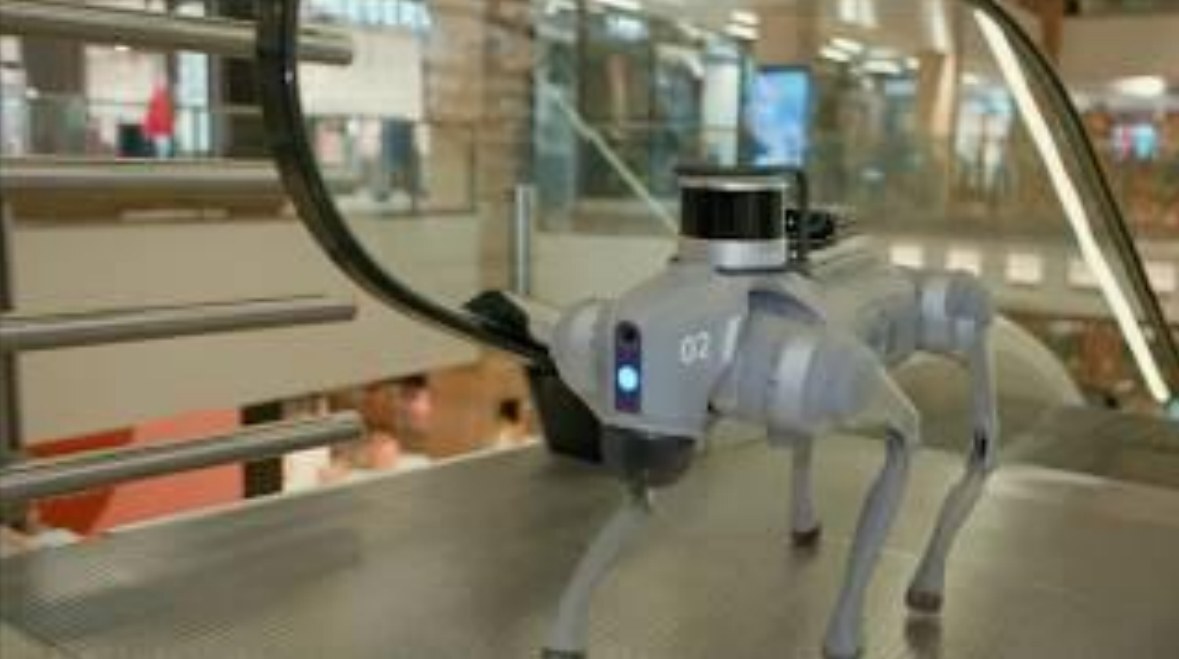
Alongside its built-in cameras, each robot carries a 360° security camera. Its streams go straight to AxxonSoft’s video management software, where they appear next to ICON’s existing fixed cameras in the same console. Operators do not learn a new tool. The robot simply becomes more cameras, ones that move.
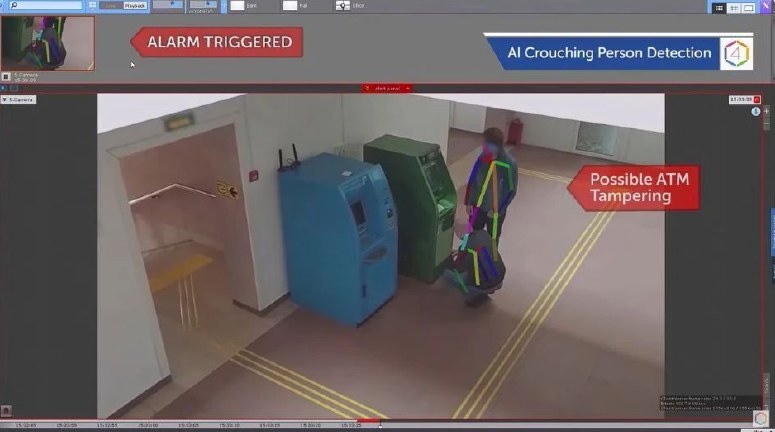
AxxonSoft’s analytics then read every frame. The system flags a person who has fallen or collapsed, someone crouching where they should not be, or anyone entering a restricted zone. Because it is also wired into the intruder and fire alarm systems, the logic runs both ways: an alarm can automatically send the robot to investigate, and what the robot finds can trigger alerts, notify the response team or fire alarm centre, and even control doors and windows.
The robot dog is not an end in itself. The streams it sends to the control centre are processed by our software.
For a control room, the most immediate gain is alarm verification. When a sensor trips at 3 a.m., an operator no longer has to choose between dispatching a patrol car and hoping it is nothing. The robot gets there first, and the operator sees through its cameras whether it is a real incident or a false alarm.
Every round also writes itself up. At each marked point of interest the robot stops, frames the same view as last time and captures a high-resolution image. The platform flags what has changed since the previous pass, and the patrol log lands in the system timestamped, with photo and video attached to each entry. No more clipboards filled in after the fact.
Watch, don’t chase
One design principle runs through the whole deployment, and it is worth spelling out for anyone considering robots on a site with the public around. The robot is there to observe and record, not to intervene. It is not meant to chase, stop or confront anyone, and it is configured to avoid interaction with people where possible, since nobody can predict how a passer-by will react to it.
The division of labour is explicit: robots automate the patrol, humans handle the response. When an operator needs to act, they take manual control, drive the robot to the spot over a low-latency link and speak to whoever is there through its speaker. Then they hand it back, and the patrol resumes where it stopped.
What it means for security providers
It would be easy to read this as a story about robots replacing guards. The people running it describe something closer to the opposite: a way to keep guarding viable when the guards are getting harder to find.
For security companies, the model changes what a contract looks like. Routine rounds, the most repetitive and least valued part of the job, move to the robot. The remaining staff concentrate on what only people can do: investigating, deciding and responding. Because the robot can be driven remotely, a single operator can supervise several sites without travelling between them.
It also changes the skills question. The guard of the near future is less a walker of routes and more an operator of systems, which is a role that can be trained for and recruited into, rather than one the market is quietly running out of.
With Nortemsy, we have added a mobile, continuous presence layer to the system that collects data, and with the right software, can already interpret what it sees.
Beyond the night shift
The same patrol machinery answers other questions too. Nortemsy is working with construction companies on weekly progress walks through active sites. Because the robot captures identical framing from the same points every time, and can add LiDAR scans, site managers can see whether the build is on schedule and whether columns, piles and walls are where the drawings say they should be. Catching a misplaced element early is far cheaper than reworking it later.
For a facility manager, the logic is the same as on the security side. The robot does not get tired, does not skip a round and does not forget what the room looked like last week.
Where to start
Nortemsy’s approach is to start with a single site. A pilot begins with a walk of the property, a first set of routes and points of interest, and a defined evaluation window. Most deployments are running within weeks.
For ICON, the direction is already set. As Dr. Hegyes puts it, this is where the company sees the future of property protection.
Buyer’s checklist
Five questions before you pilot a patrol robot
-
01
Where are your real blind spots?
Map the areas cameras do not cover and guards visit least. That is the route.
-
02
Can the robot physically get there?
Check stairs, thresholds, lifts, outdoor surfaces and weather exposure. Legged, wheeled or hybrid?
-
03
Will it plug into what you already run?
Robot video should land in your existing VMS and alarm panels, not on a separate screen.
-
04
Who responds, and how fast?
The robot detects and verifies. Define who acts on an alert and the escalation path.
-
05
How is footage handled?
Agree retention, access and GDPR rules for patrol recordings before go-live.
Ready to walk your own blind spots?
Start with a single site. We’ll walk the property with you, map the first routes and define the evaluation window.
3-month pilot · onboarding & support included · no robot purchase required to start